
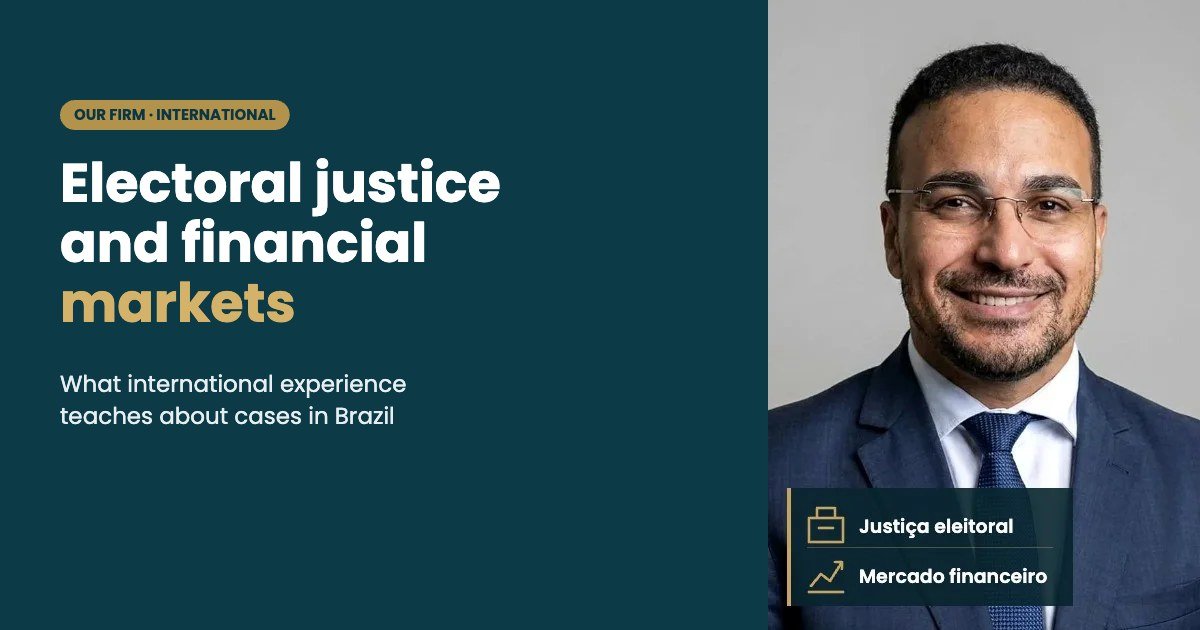
Some of the problems that reach our firm stem from rules Brazil imported or adapted from other countries. This is true of the rules banks follow to grant credit and require collateral, and of the design of Brazil’s Electoral Courts, which is often compared with foreign models whenever a reform is debated. Those who understand where these rules come from see sooner which arguments work in court.
With this goal, lawyer Sidnei Pedro Dias, founder of SPD Advocacia, took part in two international seminars at the ALFA Educação Law School, with classes at FADISP in São Paulo and in Goiânia, broadcast live between the two cities. There were 30 class hours with two professors from the University of Siena, Italy.
Elections: the Brazilian model seen from abroad
Professor Giammaria Milani, who teaches comparative constitutional law and comparative electoral law in Siena, led the seminar on comparative electoral justice systems.
Brazil has specialized Electoral Courts, which organize elections and also decide the disputes that arise from them. Other countries entrust these functions to independent administrative bodies, ordinary courts or constitutional courts. Comparing the models shows where the Brazilian system is stricter, where it concentrates power and which arguments carry weight when a candidacy or a campaign finance report is challenged.
In practice, those planning to run in Brazil’s 2028 municipal elections benefit from preparing early. Electoral deadlines are short, and many problems with candidate registration and campaign finance reports begin months before the campaign. SPD’s electoral practice is led by Dr. Eduardo Prado, who also heads the criminal practice.
Financial markets: global rules, effects on your contract
Professor Andrea Pisaneschi, full professor of Constitutional Law in Siena, addressed the international regulation of financial markets.
International banking supervision standards, such as those of the Basel Committee, are adopted in Brazil by the Central Bank and influence how much collateral banks require and how much they charge for credit. Understanding this logic helps to read a bank contract, identify charges that break the rules and negotiate with the bank from a stronger position.
The topic also reaches new, regulated sectors, such as fixed-odds betting, governed by Law 14.790/2023 and studied by Sidnei in his master’s degree in Constitutional Economic Law.
When this makes a difference in your case
- Your company is facing enforcement or collection by a bank and needs a defense that goes beyond the calculation.
- You are going to renegotiate a bank debt and want to know what can be challenged in the contract.
- Your company operates in a regulated sector and needs to understand the rules before investing.
- You plan to run for office or are part of a party’s leadership and want to prepare for 2028.
Continuous learning that becomes strategy
SPD turns ten in 2026 with the team’s constant updating as part of its working method. Studying international topics serves a concrete purpose: reaching each case with more paths for the client to choose from.
If you recognize yourself in any of the situations above, tell us about your case.
Official sources
- University of Siena: Professor Giammaria Milani.
- University of Siena: CV of Professor Andrea Pisaneschi.
- Law 14.790/2023 (fixed-odds betting, in Portuguese).
By the SPD Advocacia team. Published on 10/30/2026. Informational content, in accordance with the rules of the Brazilian Bar Association (Provision 205/2021). Each situation requires individual analysis, and no result is promised.
Related pages
Defense against banks: enforcement, collections and renegotiation of company debts.
Electoral law: candidacy, campaign advertising, finance reports and electoral lawsuits.
Business law: contracts, partners and asset protection.
Dr. Eduardo Prado: criminal and electoral practice.